
Since April 2023, fuels exported from the Netherlands to countries outside the European Union (EU), including many West African countries, have been of demonstrably better quality. The Human Environment and Transport Inspectorate (ILT) introduced measures to improve the quality of fuels for on-road use. In a recent evaluation, the ILT looked at the overall effects of the policy rule. In particular, concentrations of sulphur and benzene in fuels have fallen sharply.
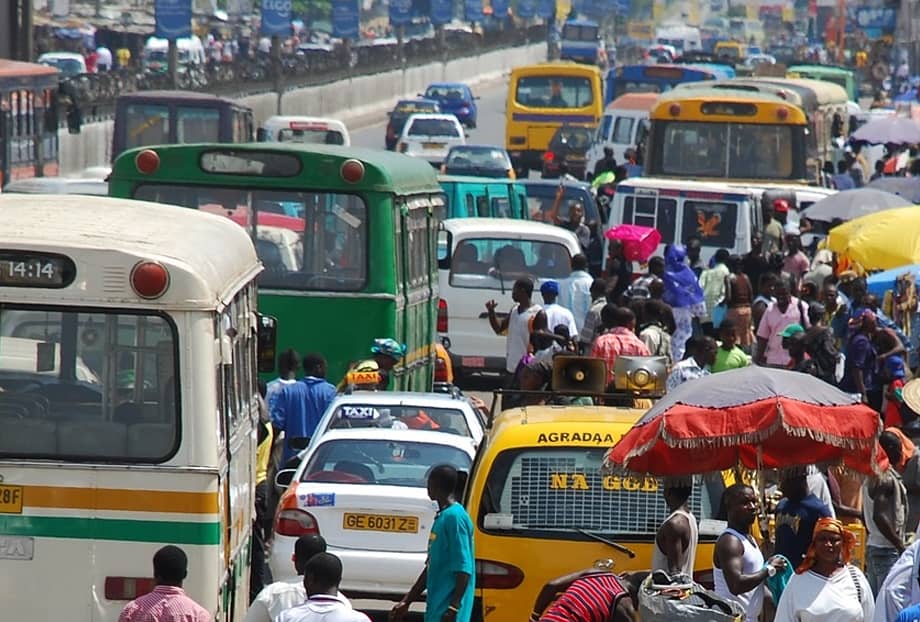
In 2018, the ILT discovered that on-road fuels with high levels of harmful substances were being exported from the Netherlands to West Africa. In response, the ILT published a policy rule in 2022 in which it set limit values for harmful substances such as sulphur, benzene and manganese. The aim: to contribute to a cleaner environment and to protect public health, also outside the EU.
The following year, in 2023, the ILT examined the first results. The policy rule has now been evaluated in its entirety. The Staatssecretaris (State Secretary) of the ministerie van Infrastructuur en Waterschap, IenW (Ministry of Infrastructure and Water Management) will send the evaluation to the Tweede Kamer (House of Representatives).
Positive effects in West Africa
The quality of fuels exported to West Africa has improved noticeably since the introduction of the policy rule. Quality certificates show that concentrations of sulphur and benzene in export fuels in particular have been significantly reduced. The ILT notes that West African countries have been paying high prices for low-quality fuels for years. The introduction of stricter rules has contributed to a fairer price-quality ratio.
Circumventing the rules
Yet not all companies act in the spirit of the policy rule. Traders based in Switzerland in particular are trying to circumvent the rules by producing fuel in other countries or blending it with other harmful substances. In some cases, fuel is exported as a semi-finished product, with additions being blended in outside the Netherlands in ways that conflict with the purpose of the regulations. According to the ILT, these practices undermine the intended societal impact and are in conflict with the duty of care. The ILT will therefore continue to actively check compliance. The ILT will also bring the practices of traders established in Switzerland to the attention of the Swiss National Contact Point (NCP) for OECD Guidelines and to the Swiss government.
Level playing field
Petrol exports to West Africa have fallen, this is also due to reduced demand from Nigeria and shifts within the market. In Nigeria, standards have also gradually become stricter, partly because in 2024 Nigeria put in operation the largest refinery in Africa, designed to produce clean fuels. The decline in petrol exports from the Netherlands to West Africa has been partly offset by exports to other regions. Initially, part of the production shifted to Belgium, but the same rules (in Dutch) for the export of fuel quality were introduced there in September 2024. This means that there is now a level playing field within the ARA area (Amsterdam, Rotterdam, Antwerp). In its supervision, the ILT cooperates with its Belgian colleagues.
During an event organised by the Benelux Union together with UNEP earlier this year, other EU Member States were called upon to follow the example of Belgium and the Netherlands. At the end of last year, an EU approach was discussed at the Energy Council of European Economic Affairs Ministers.
Proposal: convert policy rule into legislation
Based on the evaluation and the agreements within the Benelux Union, converting the policy rule into binding legislation, for example an Order in Council (AMvB), would be a positive next step. This will give the specifications a firm legal basis and allow the ILT's experiences with supervising the duty of care to be included. The Ministry of Infrastructure and Water Management is currently exploring this step.