
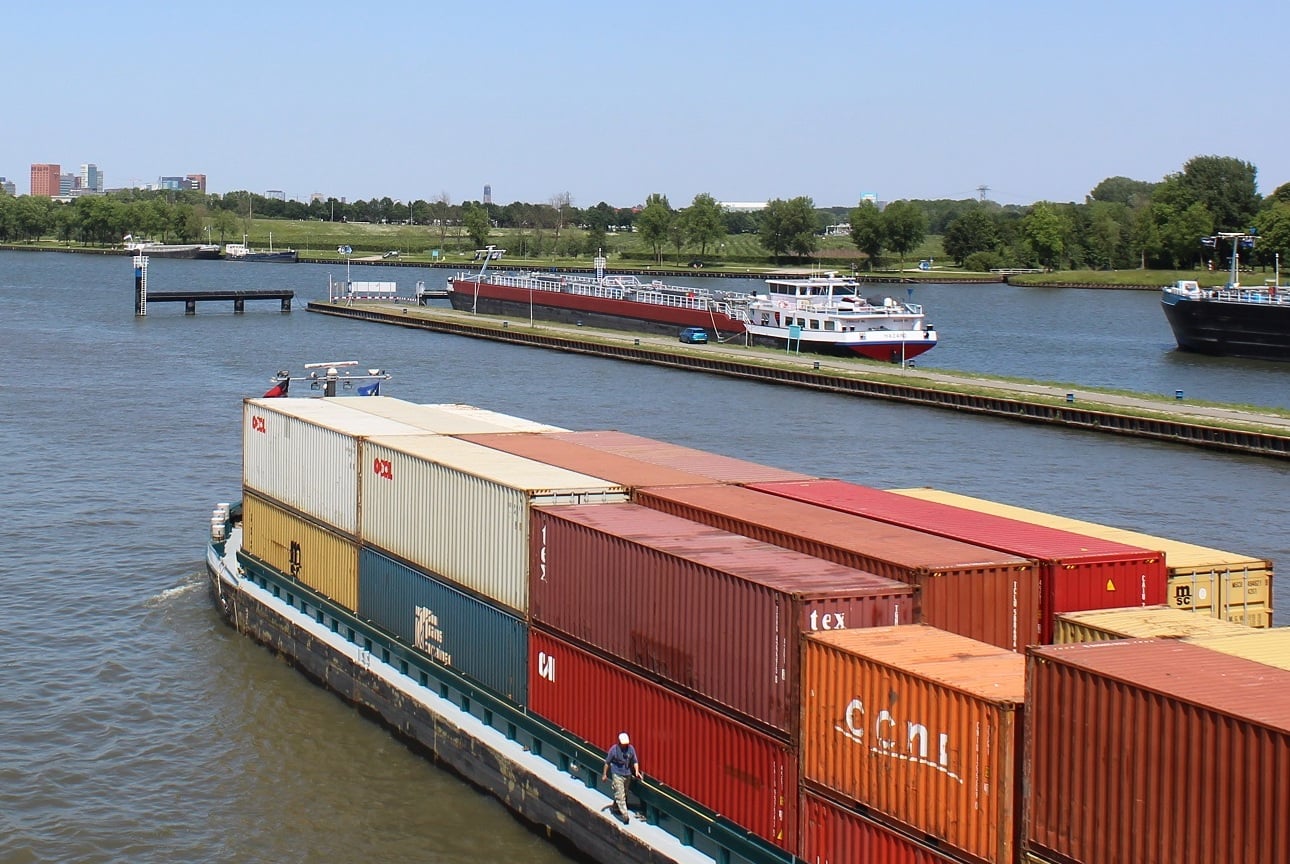
Professionally operated inland navigation vessels in the Netherlands must have specific certificates to prove they meet technical requirements. Other documents may also be required. The Human Environment and Transport Inspectorate (ILT) oversees compliance.
Inland Navigation Certificate: ES-TRIN requirements
A binnenschipcertificaat (Inland Navigation Certificate) proves that an inland navigation vessel complies with the technical requirements for safe operation. The certificate indicates in which of the zones 1, 2, 3, and 4 you are allowed to sail, how the vessel can and cannot be used, and which restrictions or exceptions apply.
- The most common types of inland navigation vessels (in Dutch) must meet the technical requirements of the European standard ES-TRIN. This certification is granted according to Directive (EU) 2016/1629 of the European Parliament and of the Council or the Reglement onderzoek schepen op de Rijn, ROSR (Rhine Vessel Inspection Regulation, in Dutch).
- For passenger vessels on major waterways (zone 2) and special vessel types, additional or different technical requirements apply. These are outlined in the annexes of the Binnenvaartregeling (Inland Navigation Regulations, in Dutch). These annexes often refer to ES-TRIN.
You can apply for an Inland Navigation Certificate through one of the notified bodies for inland navigation vessels in The Netherlands (in Dutch).
An Inland Navigation Certificate is valid for 5 years for passenger ships and tankers carrying dangerous goods. For other vessels, the certificate is valid for 7 years. Make sure to renew your certificate before it expires.
If the keel of your inland navigation vessel was laid before 1 April 1976, a relaxed standard for noise levels in living and sleeping areas applies upon renewal of your Certificaat van Onderzoek voor Rijnschepen, CvO-R (vessel certificate).
In case ES-TRIN requirements are difficult to implement on your inland navigation vessel or would lead to disproportionately high costs, you can ask the notified body to apply for a hardship clause on your behalf. You will need to provide certain data and information. Your request will be reviewed by the ILT and an international working group.
If the hardship clause is granted, the notified body will add a note on the Inland Navigation Certificate, below number 52.
It is possible to deviate from ES-TRIN requirements if you have valid reasons to do so. To deviate from the requirements, the notified body must request an international recommendation from the ILT on your behalf.
For certification under Directive (EU) 2016/1629 of the European Parliament and of the Council or the ROSR, this can be done:
- On the basis of equivalence. Do you want to use materials, facilities, or arrangements different from those specified in ES-TRIN? In this case, you will need to demonstrate that they are equivalent to ES-TRIN requirements.
- To test new technology. Do you want to test new technical facilities that deviate from ES-TRIN requirements for a certain period of time? Then you will need to demonstrate that the new facilities are safe enough. You must clearly explain the importance of innovation. After a successful testing period, you can apply for a permanent recommendation on the basis of equivalence.
For certification under an annex of the Inland Navigation Regulations, the ILT may, under certain conditions or restrictions, allow deviations or grant exemptions. You can apply for this through one of the notified bodies for inland navigation vessels in the Netherlands ( in Dutch). A deviation or exemption is always granted on an individual basis.
Requirements for the equipment of inland navigation vessels
Many different parts of the technical equipment on board inland navigation vessels require periodic inspections (in Dutch) to ensure they continue to meet ES-TRIN requirements. These inspections must be carried out by ILT-recognised experts. Make sure to check the specific requirements for diesel engines (in Dutch), fire extinguishers, and first aid kits too.
Provisional Inland Navigation Certificate for special circumstances
In some cases, inland navigation vessels can get a voorlopig binnenschipcertificaat (Provisional Inland Navigation Certificate). You can apply for a Provisional Inland Navigation Certificate through one of the notified bodies for inland navigation vessels in the Netherlands (in Dutch). The Binnenvaartbesluit (Inland Navigation Decree) outlines special circumstances in which a Provisional Inland Navigation Certificate may be allowed (in Dutch). How long the provisional certificate is valid, depends in the individual circumstances. Special rules and regulations may apply.
Certificate of Approval for the transport of dangerous goods
Inland navigation vessels carrying dangerous goods must have a Certificaat van Goedkeuring (Certificate of Approval) in addition to the Inland Navigation Certificate. The rules and conditions are outlined in chapter 1.16 of the ADN (European Agreement concerning the International Carriage of Dangerous Goods by Inland Waterways).
You can apply for a Certificate of Approval through one of the notified bodies for inland navigation vessels in the Netherlands (in Dutch).
Tonnage Certificate for inland navigation vessels
A meetbrief (Tonnage Certificate, in Dutch) is required for:
- Inland cargo vessels with a cargo capacity of more than 20,000 kg.
- Other inland navigation vessels with more than a 10m³ difference between empty and maximum allowable water displacement, including the total of passengers and supplies on board, such as fuel oil, drinking water, and equipment.
- Sea-going vessels with a certificaat voor zeeschepen die de Rijn bevaren (Seagoing Ship Statutory Certificate) if they operate on inland waters with a greater depth than at sea or in coastal waters.
When in doubt, an ILT surveyor will determine the displacement or tonnage.
In some cases (specified in Dutch), registration of your inland navigation vessel is not mandatory. In these cases, a Tonnage Certificate is not required either, even if you have voluntarily registered the vessel.
How to apply for or renew a Tonnage Certificate with the ILT
You can apply for or renew a Tonnage Certificate using the Aanvraag meetbrief voor de binnenvaart online form (in Dutch). In case the inland navigation vessel is new, rebuilt, or modified, the ILT will conduct an onboard measurement.
A Tonnage Certificate is valid for 10 or 15 years, depending on the type of vessel. The ILT can renew a Tonnage Certificate that was issued in The Netherlands without an onboard measurement, as long as the light displacement and engine remain unchanged.
If the Tonnage Certificate has expired more than 10 years ago, or if you wish to renew a Tonnage Certificate that was issued outside The Netherlands, the ILT will conduct an onboard measurement.
Appointments and costs for applying for, renewing, or cancelling a Tonnage Certificate
Onboard measurements by the ILT can only be conducted within the Netherlands, not outside the Netherlands. You can reschedule an appointment free of charge up to 4 business days in advance by contacting terugbelverzoeken@ilent.nl or calling +31 (0)88 – 489 00 00.
The costs for a Tonnage Certificate and a ship measurement are listed in the Regeling tarieven transportsectoren (regulation on transport sector fees, in Dutch). If you cancel an application, cancellation fees (in Dutch) apply.
Duplicate documents
If a Dutch inland navigation document has been lost or stolen, you can apply for a duplicate.
- To apply for duplicates of Tonnage Certificates, exemptions, and declarations issued by the ILT, use the Aanvraag duplicaat bij vermissing scheepsdocumenten online form (in Dutch).
- For Inland Navigation Certificates and Certificates of Approval, request a duplicate from the notified body (in Dutch).
Other required documents for inland navigation vessels
Find out which other documents you must have on board:
- In Chapter 1, Article 1.10 of the Binnenvaartpolitiereglement (Inland Waterways Police Regulations).
- On the certified waters, in Chapter 1, Article 1.10 of the Rijnvaartpolitiereglement (Police Regulations for the Navigation of the Rhine, RPNR, in Dutch).
Fuel oil for inland navigation vessels
As an inland navigation vessel owner or boatmaster, you must comply with the rules for fuel oil for inland navigation vessels. The ILT monitors whether:
- The sulphur content in the fuel oil that you have on board for propulsion is a maximum of 10 milligrams per kilo.
- A fuel oil sample is taken at the time of fuel oil delivery to provide proof of the composition of the delivered fuel oil. You must keep this sample on board for some time. If the sulphur content exceeds the allowed limit, you can recover the costs from the supplier.